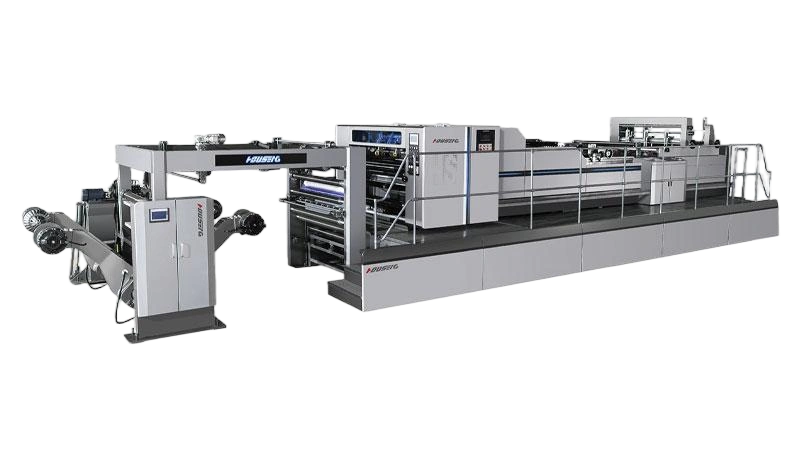
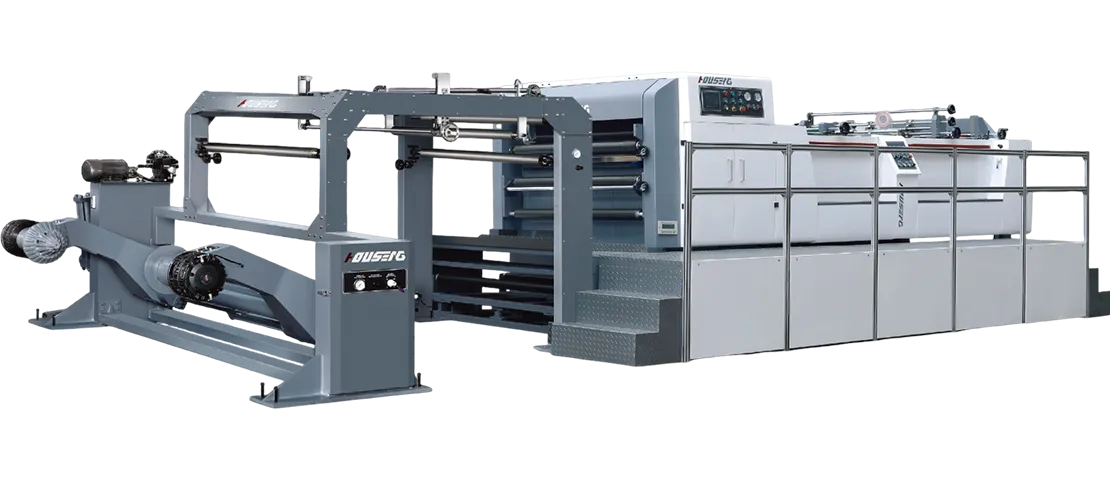
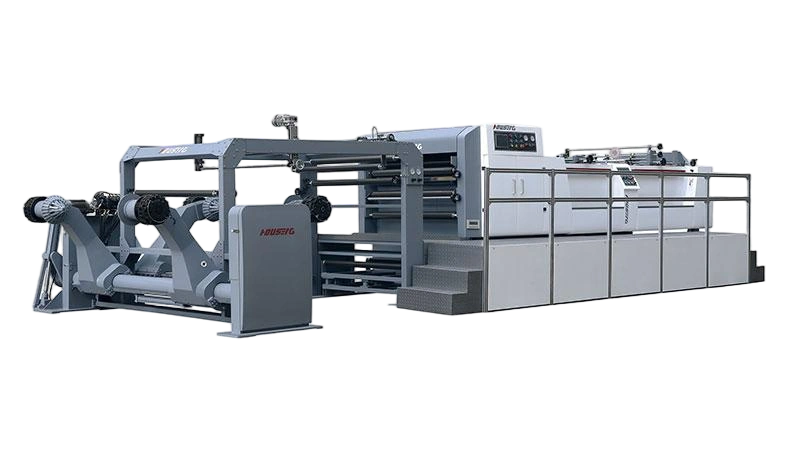
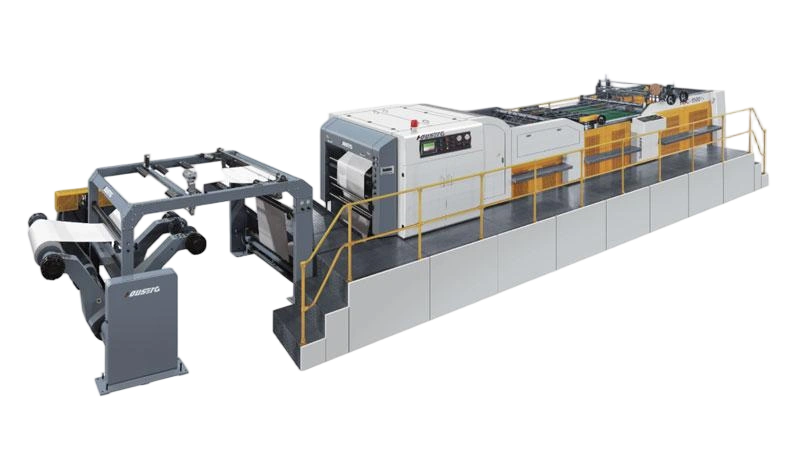
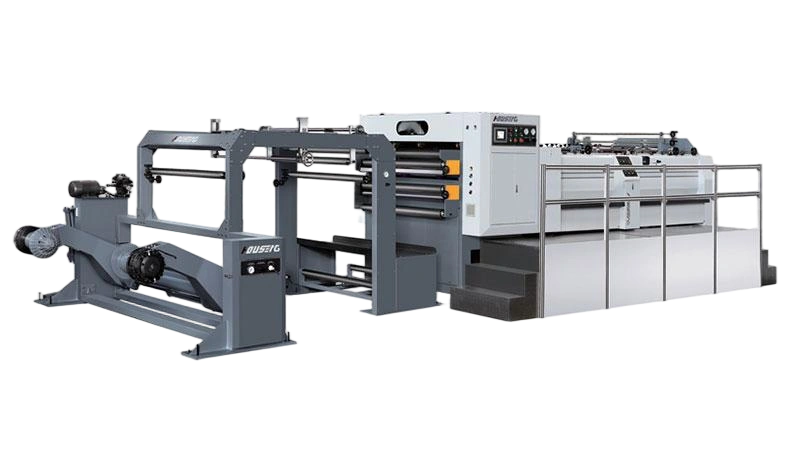
When a paper converting line is running an older sheeter—mechanical drive, lower speed, visible paper fuzz on cut edges—the production team often knows exactly what the machine is costing them: lost material from wide cutting seams, additional cleaning stops on the printing press, and sheets that don't quite meet the accuracy requirements of today's high-speed packaging lines. Upgrading to a modern synchro-fly sheeter machine addresses these pain points directly, and the benefits show up quickly in the production numbers. Here are the five most significant gains that converters and printers report after making the switch.
More Saleable Sheets Per Ton of Paper
This is the benefit that catches every production manager's attention because it translates directly to the bottom line. Older sheeters use wider cutting seams—the small strip of paper that is lost with every cut. Over thousands of cuts, those millimeters add up to kilograms of wasted material.
The HOUSENG Synchro-Fly product page describes an "embedded double spiral knife design" that can save cutting paper seams and "cut out 150-200 more sheets per ton of paper." This is not a theoretical number—it is the direct result of a narrower, more precise cutting seam achieved by the double rotary knife configuration. For a mill or converter processing hundreds of tons per month, recovering 150-200 sheets from every ton represents a significant material cost reduction that compounds over the machine's service life.
Paper Fuzz Reduction That Eliminates Printing Press Stops
Paper fuzz—those microscopic fibers that cling to the cut edge—is more than a cosmetic issue. On an offset press, fuzz transfers to the blanket, requiring more frequent blanket washes and increasing press downtime. For food packaging, fuzz can even become a contamination concern.
The HOUSENG page highlights that the double-spiral sheeter uses an "embedded cutting head design" that produces a "straight cutting cross profile" and "does not pull out fibers." This is described as "the key point to eliminate hairs of paper." The result is a clean, smooth edge that can go directly to the printing press without additional edge preparation. The product page states that sheets come with "neat delivery, no scratches, no paper fuzz" and can be "directly used for printing to achieve high-efficiency production and save labor costs." For a commercial printer, fewer blanket washes translate to more sellable press hours.
Higher Running Speed Without Sacrificing Accuracy
Speed and precision are often a trade-off in older mechanical sheeters. Running faster usually means accepting wider tolerances. The synchro-fly design changes this equation. The HOUSENG specification shows maximum cutting speeds of 300-400 cuts per minute and cutting meter speeds up to 300 m/min, while maintaining cutting accuracy of ±0.15mm on the high-end models.
The EXC series (Excellent Version) reaches 200 m/min with 348 cuts/min and ±0.15mm accuracy. The HSC-S and HSC-SS models push further to 300 m/min and 400 cuts/min at the same ±0.15mm tolerance. For a converter running multiple shifts, the combination of higher throughput and tighter tolerances means more production volume that meets quality specifications without rework.
Material Versatility Across Paper Grades
An older sheeter that was set up for one paper grade often struggles when the job mix changes. The HOUSENG synchro-fly models are designed to handle a wide range: the EXC series lists "cardboard paper, coated paper, kraft paper, cultural paper, writing paper, double gummed paper, gloss photo paper, gold and silver cardboard, aluminum paper, laser paper, packaging paper" as applicable types.
The pneumatic slitting knives and rigid knife holder, referenced in the product page, enable high-speed cutting of various materials. This versatility means a single synchro-fly sheeter can serve multiple product lines—from lightweight offset to heavy packaging board—without the setup time and quality compromises that slower mechanical sheeters require when switching grades.
Smarter Automation and Process Integration
Modern synchro-fly sheeters are designed to integrate with upstream and downstream processes more seamlessly than older mechanical models. The HOUSENG page mentions "intelligent dust removal and alignment systems for cleaner and more precise production." Features like automatic anti-curved adjustable control systems, independent main machine lubrication, and high-precision gapless gear transmission reduce operator intervention and unplanned stoppages.
The optional inkjet coding system available on some models further integrates quality tracking into the sheeting process. These automation features translate to fewer operators per shift and more consistent output across different operators and production runs.
Upgrade Benefits at a Glance
| Benefit | What the HOUSENG Synchro-Fly Offers |
|---|---|
| Material savings | 150-200 extra sheets per ton via embedded double spiral knife design |
| Paper fuzz reduction | Clean, straight cut edges; no fiber pulling; direct-to-print quality |
| Speed with precision | Up to 400 cuts/min at ±0.15mm accuracy |
| Material versatility | Handles cardboard, coated paper, kraft paper, gold/silver cardboard, and more |
| Automation and integration | Intelligent dust removal, alignment systems, optional inkjet coding |
All data sourced from HOUSENG Synchro-Fly Sheeter Machine product pages. Actual performance depends on paper grade, roll condition, and operating environment.
Frequently Asked Questions
Q: How much can I realistically save per ton by upgrading to a synchro-fly sheeter?
A: The HOUSENG product page cites 150-200 additional sheets per ton of paper through the narrower cutting seam of the embedded double spiral knife design. The actual savings depend on the paper grade, roll condition, and the machine being replaced. Converting this sheet count to a monetary value requires knowing the paper cost per sheet for your specific operation.
Q: Does the double rotary knife design work for all paper types?
A: The HOUSENG page lists compatibility with cardboard, coated paper, kraft paper, writing paper, gold and silver cardboard, aluminum paper, and laser paper, among others. Different paper weights and coatings may require adjustments to knife clearance and speed, but the design is intended for broad material versatility.
Q: What is the difference between the EXC, HSC-S, and HSC-SS models?
A: The EXC series (Excellent Version) runs at 200 m/min and 348 cuts/min. The HSC-S series reaches 300 m/min and 400 cuts/min. The HSC-SS series adds features like high-precision gapless gear transmission, independent lubrication, and an automatic anti-curved control system. The choice depends on the required production volume and the level of automation needed. You can compare the available synchro-fly sheeter models to see which fits your throughput requirements.
Q: How does the embedded cutting head design eliminate paper fuzz?
A: The design produces a straight cutting cross profile that shears fibers cleanly rather than pulling or tearing them. The HOUSENG page identifies this as "the key point to eliminate hairs of paper." This is particularly important for coated papers and packaging grades where edge quality affects print registration and appearance.
Q: Is the upgrade from a mechanical sheeter to a servo-driven synchro-fly model complex?
A: The installation depends on the existing line configuration, but synchro-fly sheeters are designed as replacement units for paper converting lines. The product page describes features like the automatic anti-curved adjustable control system and intelligent alignment that reduce the manual setup and calibration time compared to older mechanical machines.
Conclusion
The decision to upgrade from an older sheeter to a synchro-fly machine ultimately comes down to three questions: How much material is the current machine wasting through wide cutting seams? How many press stops are caused by paper fuzz? And how much production capacity is lost to lower speeds and wider tolerances? The HOUSENG synchro-fly sheeter addresses all three with measurable gains—150-200 more sheets per ton, fuzz-free edges ready for printing, and precision cutting at up to 400 cuts per minute.
If you are evaluating whether the upgrade makes financial sense for your operation, the next step is to calculate the material savings based on your current tonnage and paper costs, then compare that against the investment. For help with that calculation or to discuss which model fits your production mix, you can get a quote for the HOUSENG synchro-fly sheeter series.