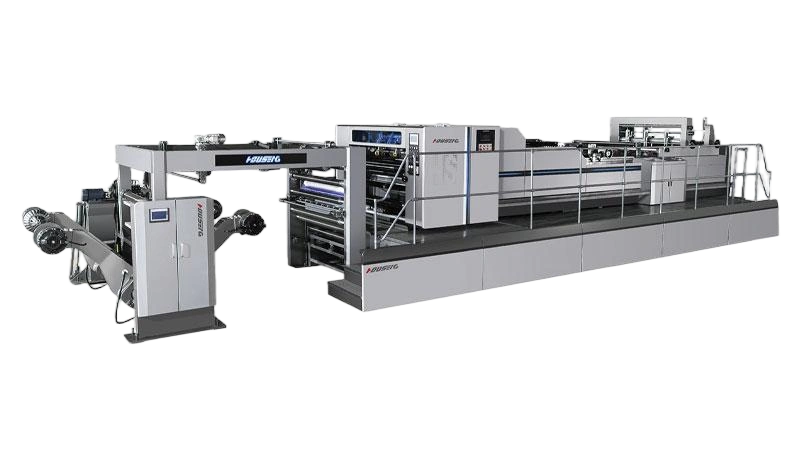
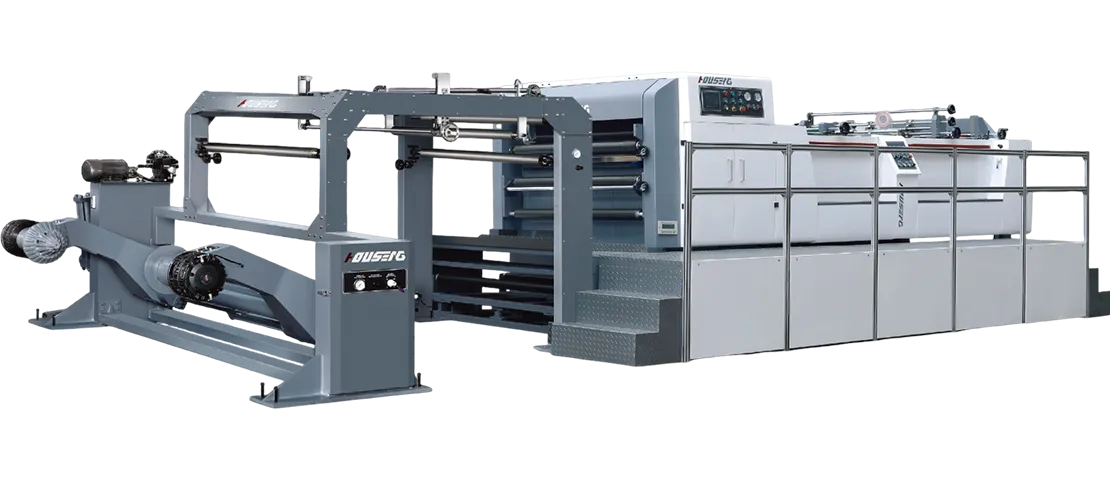
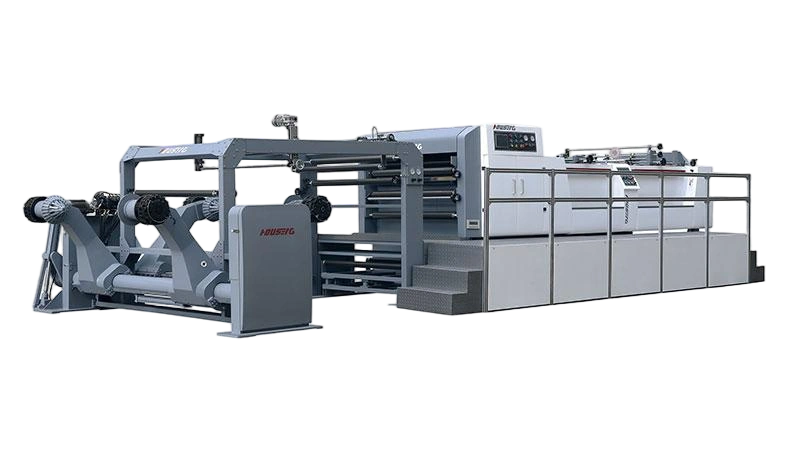
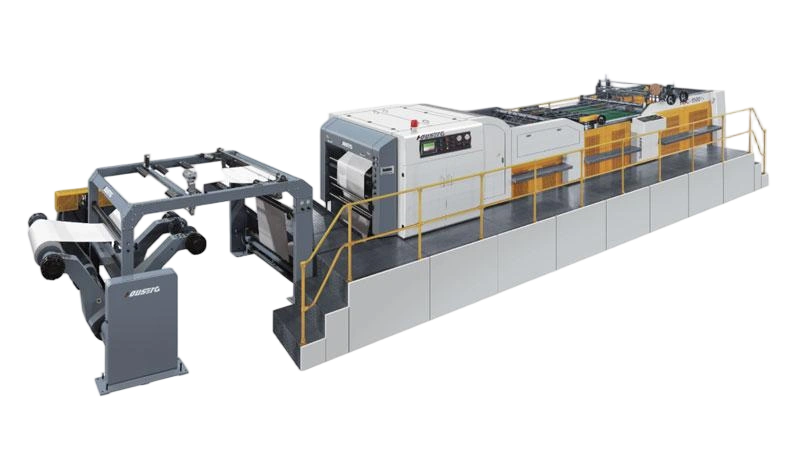
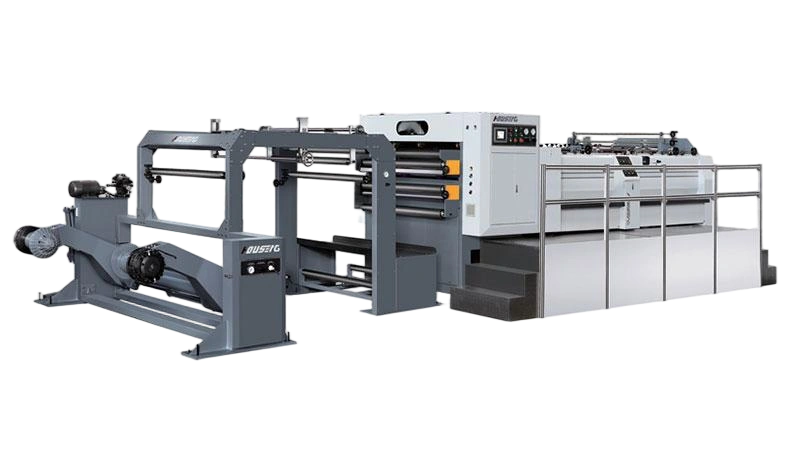
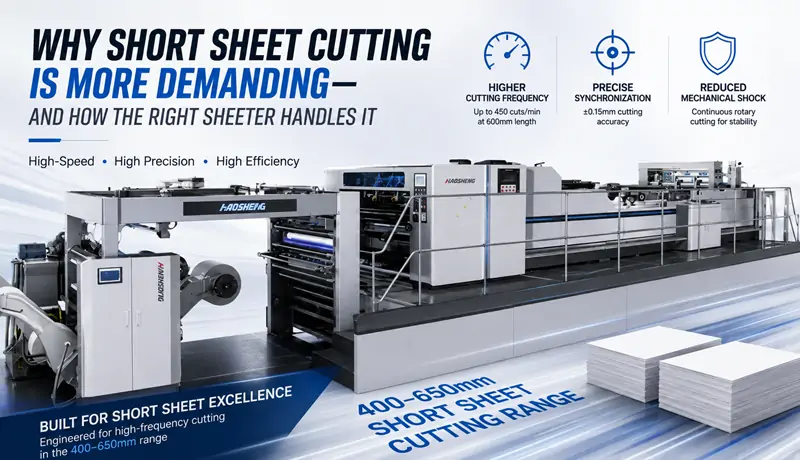
Short sheet cutting—producing sheets of 400–650mm in length—places significantly higher demands on a double rotary sheeter than longer runs. The cutting frequency increases dramatically, mechanical components experience more frequent acceleration and deceleration cycles, and the control system must maintain ±0.15mm precision with less time between cuts. A double rotary sheeter designed specifically for short-length production addresses these challenges through synchronized knife motion, servo-driven precision, and reduced mechanical shock.
For many paper converters, the assumption is that shorter sheets are simply easier to produce—less paper, less weight, less stress on the machine. In reality, the opposite is true. Short sheet cutting is one of the most demanding applications for any roll-to-sheet cutting line. This article explains why, and what to look for in a sheeter that can handle short runs without sacrificing speed, accuracy, or reliability.
What Makes Short Sheet Cutting More Difficult?
The difficulty of short sheet cutting comes down to three factors: cutting frequency, mechanical stress, and control system response.
Cutting Frequency
When you cut shorter sheets, the machine must cycle more times per minute to maintain the same line speed. A sheeter running at 300 m/min cutting 1000mm sheets makes 300 cuts per minute. The same machine cutting 400mm sheets must make 750 cuts per minute—more than twice the number of cutting cycles.
This increase in cutting frequency places higher demands on:
- The knife drive system (more starts and stops per minute)
- The synchronization system (knives must align precisely with the web more frequently)
- The stacking system (more sheets to handle per unit of time)
Mechanical Stress
Every cutting cycle generates mechanical shock. The knives engage, shear the paper, and disengage. With shorter sheets, this cycle repeats more frequently, transmitting more cumulative stress to bearings, drive components, and the machine frame.
For single-knife or guillotine-style sheeters where the knife must stop and restart between each cut, the impact is even greater. The start-stop motion creates inertial forces that increase wear on the drive system and reduce the service life of critical components.
Control System Response
Precision cutting requires the control system to measure web speed, calculate the exact cut timing, and execute the cut—all within milliseconds. With shorter sheets, the control system has less time to complete this loop. Any latency or drift in the feedback system becomes more pronounced, potentially affecting cut length accuracy.
How a Double Rotary Sheeter Addresses Short-Cut Challenges
A double rotary (twin rotary) sheeter uses two synchronized rotary knives that rotate continuously, cutting the paper web as it passes between them. Unlike single-knife designs, the double rotary system does not rely on a start-stop cutting motion—the knives are always moving, always synchronized with the web speed.
This continuous cutting action offers three advantages for short sheet production:
Reduced Mechanical Shock
Because the knives rotate continuously rather than stopping and restarting, the mechanical shock transmitted to the machine is significantly lower. This is particularly important in short-cut applications where the cutting cycle repeats hundreds of times per minute. Lower shock means less wear on bearings, longer service life, and more consistent cutting quality over time.
Higher Cutting Frequencies
The continuous motion of a double rotary system allows it to achieve cutting frequencies that are simply not possible with start-stop designs. A well-configured double rotary sheeter can reach 400 cuts per minute or more, maintaining high line speeds even when cutting short sheets.
Consistent Precision
The synchronized knife motion of a double rotary sheeter keeps the cutting action stable across the full speed range. The relative speed between the knives and the paper web remains low, producing a scissors-like shearing action rather than an impact cut. This results in cleaner edges, less paper dust, and more consistent sheet dimensions—even at maximum cutting frequency.
The EXC Series Approach to Short Sheet Cutting
The EXC series double rotary sheeter, released in November 2023, was developed specifically with short-length cutting performance in mind. Rather than adapting a general-purpose sheeter for short runs, the EXC series incorporates design choices that address the unique demands of high-frequency cutting.
Short-Length Performance Data
The performance improvement in the 400–650mm cutting range is substantial:
| Cut Length (mm) | Standard Speed (cuts/min) | EXC Speed (cuts/min) | Improvement |
|---|---|---|---|
| 400 | 200 | 348 | +73.8% |
| 450 | 222 | 373 | +68.0% |
| 500 | 260 | 402 | +54.6% |
| 550 | 291 | 433 | +48.8% |
| 600 | 333 | 450 | +35.0% |
| 650 | 369 | 415 | +12.5% |
The improvement is most pronounced at shorter lengths—exactly where the cutting frequency challenge is greatest.
Key Design Features for Short-Cut Performance
German Siemens PLC + US Emerson Servo Drive
The control system must respond quickly and precisely to maintain accuracy at high cutting frequencies. The combination of Siemens PLC and Emerson servo drive provides the processing speed and precision needed for short-cut applications.
CT Servo Drive Rotary Knife Shaft + Energy Storage Cabinet
The servo-driven knife shaft ensures precise synchronization between the knives and the paper web. The energy storage cabinet reduces power consumption while maintaining the responsive torque needed for high-frequency cutting.
Full Mesh Belt with Suction Fan
Paper handling becomes more critical at higher speeds. The full-width mesh belt with integrated suction fan keeps the paper stable during conveying, eliminating the risk of edge impact and maintaining smooth operation even at maximum cutting frequency.
Infrared Align Auto-Adjustment
Quick setup and precise alignment reduce waste during changeovers—particularly important when running multiple short-cut orders with different sheet sizes.
When Does Short-Cut Performance Matter Most?
Short sheet cutting is not a niche requirement—it appears across multiple paper converting applications:
Commercial Printing
Many commercial print jobs require folio-size sheets (typically 400–650mm in length). A sheeter that slows down significantly on short runs becomes a bottleneck for the entire printing operation.
Packaging Converters
Packaging materials often require specific sheet sizes that fall into the short-length range. Corrugated board, folding box board, and carton stock are frequently cut at 500–600mm lengths. For operations running these materials, custom configurations for packaging applications can make a significant difference in throughput.
Paper Mills
Paper mills producing cut-size sheets for the office paper market—A4, letter, legal—operate almost exclusively in the short-length range. Throughput in this segment is directly tied to short-cut performance.
Specialty Paper
Specialty papers such as photographic paper, label stock, and release liners often require specific short sheet sizes for downstream coating or converting processes.
Practical Considerations for Buyers
When evaluating a sheeter for short-cut applications, consider these factors:
| Consideration | Why It Matters |
|---|---|
| Cutting frequency at your target length | A machine rated for 300 m/min may not achieve that speed at short lengths—check the speed curve, not just the maximum |
| Knife system type | Double rotary systems handle high frequencies better than single-knife designs |
| Control system response time | Faster PLC and servo response = better accuracy at high frequencies |
| Mechanical rigidity | Higher cutting frequencies generate more cumulative stress—frame rigidity matters |
| Stacking system capacity | More cuts per minute means more sheets to stack—ensure the layboy can keep up |
The EXC series was designed with these considerations in mind, with particular attention to the 400–650mm range where the speed improvement is most significant. If you are evaluating sheeter options for your operation, discuss your production requirements with the team to determine which configuration best fits your cutting length profile.
Frequently Asked Questions
Why does short sheet cutting require more from a sheeter than long sheet cutting?
Short sheets require more cuts per minute to maintain the same line speed. More cuts mean more mechanical cycles, more control system responses, and more stress on bearings and drive components—all within the same time frame.
What cutting frequency can a double rotary sheeter achieve on short sheets?
A well-configured double rotary sheeter can achieve 400 cuts per minute or more, depending on the sheet length. The EXC series, for example, reaches 450 cuts per minute at 600mm length and 402 cuts per minute at 500mm length.
Is a double rotary sheeter always better for short sheet cutting than a single-knife sheeter?
Generally, yes. The continuous cutting motion of a double rotary system reduces mechanical shock and allows higher cutting frequencies than start-stop single-knife designs. For operations that run significant volumes of short sheets, the double rotary system offers clear advantages.
What sheet length range is considered short sheet cutting?
In the paper converting industry, short sheet cutting typically refers to lengths under 650mm. The EXC series shows its strongest performance improvement in the 400–650mm range.
Does short sheet cutting affect paper waste?
Yes. More cuts per minute mean more opportunities for setup errors, misalignment, and out-of-spec sheets. A sheeter that maintains precision at high cutting frequencies reduces waste in short-run production.
How does servo drive technology help with short sheet cutting?
Servo drives provide faster response times and more precise position control than mechanical or hydraulic systems. For short-cut applications where the control loop must complete in milliseconds, servo technology is essential for maintaining accuracy.
Conclusion
Short sheet cutting is not simply a matter of cutting less paper. It is a fundamentally more demanding application that tests the limits of a sheeter's mechanical design, control system, and cutting technology.
Key takeaways for buyers:
- Check the speed curve, not just the top speed—a machine rated for 300 m/min may not achieve that speed at short lengths
- Double rotary systems handle high frequencies better—the continuous cutting action reduces mechanical shock and enables higher cutting frequencies
- Control system response matters—faster PLC and servo response = better accuracy at high cutting frequencies
- Look for short-length performance data—manufacturers who have optimized for short runs will have data to prove it
If your operation runs significant volumes of short sheets—whether for commercial printing, packaging, or cut-size paper production—the sheeter you choose should be designed for that specific demand.
This article provides general guidance on short sheet cutting considerations. Actual performance depends on operating conditions, material characteristics, and specific machine configurations. Buyers should confirm specifications with the supplier for their particular application.