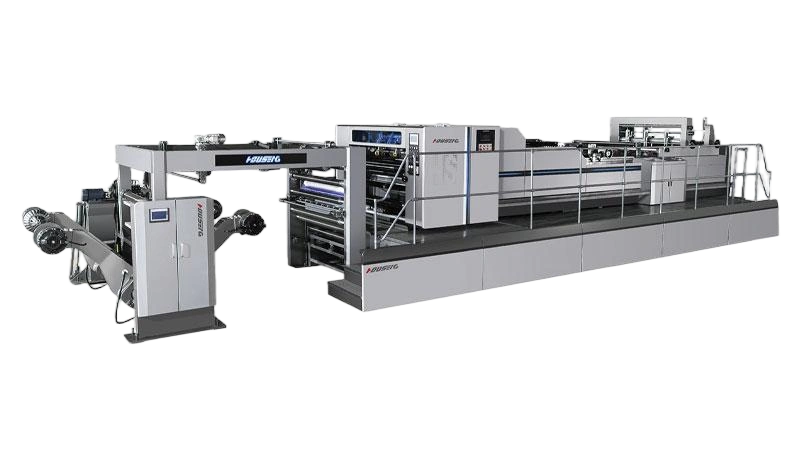
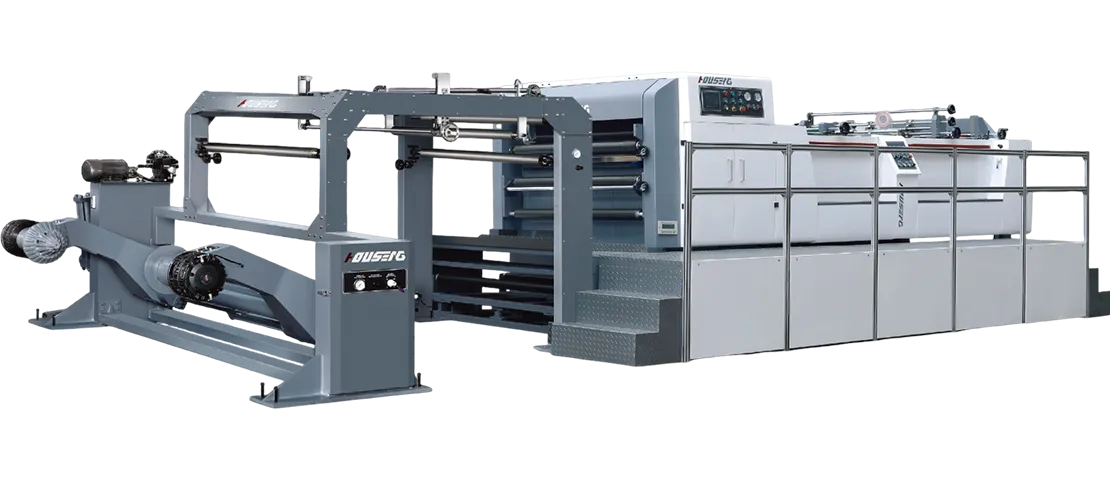
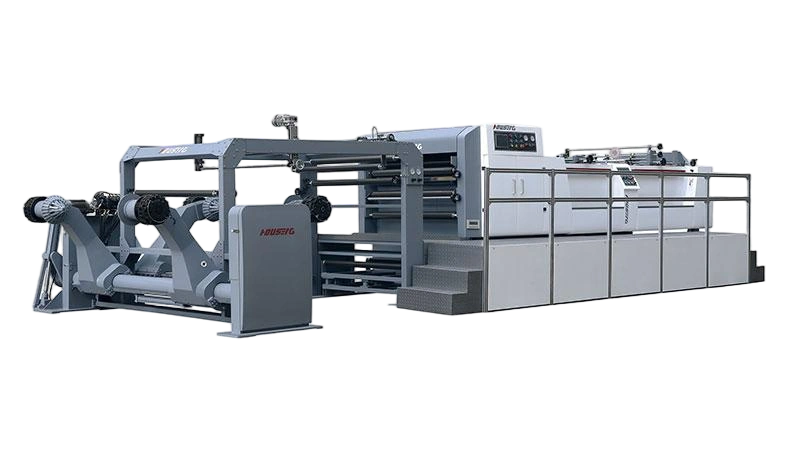
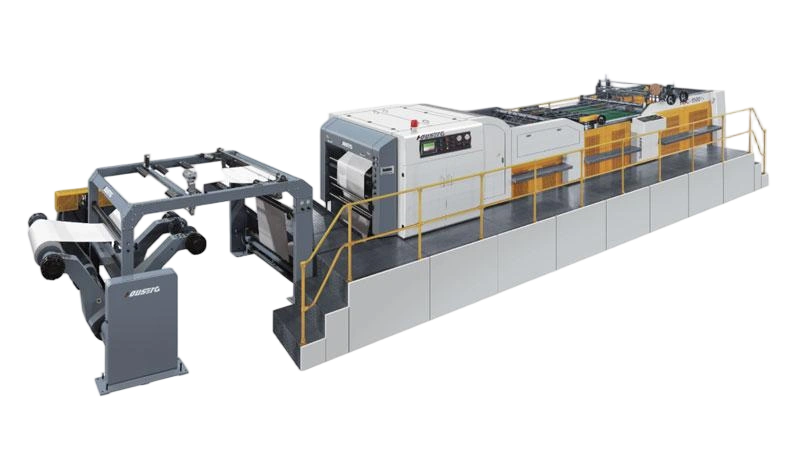
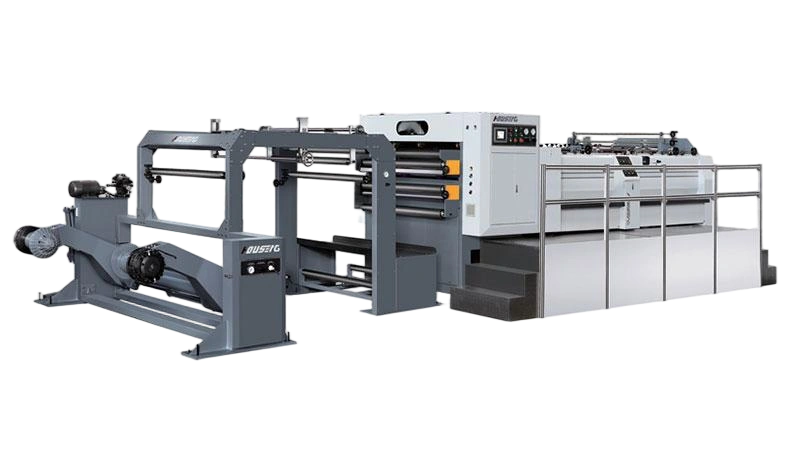
A roll‑to‑sheet cutting line is never a standalone investment. It exists to feed a downstream process – an offset press, a corrugator, a laminating line, or a converting machine – with sheets that meet that process's specific requirements for squareness, dimensional accuracy, and edge quality. The same sheeter that works perfectly in a commercial print house may be the wrong configuration for a paper mill or a packaging converter. Understanding how different industries use this equipment helps buyers specify the right machine for their application.
Commercial Printing: Feeding Offset and Digital Presses
Commercial printers use roll‑to‑sheet equipment to produce their own sheets from roll stock rather than buying pre‑cut sheets from a paper merchant. The economic driver is simple: paper in rolls costs less per kilogram than paper in sheets, and a printer that converts its own rolls captures that margin. A sheeting line in a print house typically runs a wide variety of paper types – from lightweight uncoated stock for notepads to heavy coated art board for brochures – and must switch between them multiple times per shift.
The critical requirement in this application is sheet‑length accuracy and squareness. An offset press demands sheets that are square to within a fraction of a millimetre; otherwise, the gripper edge shifts during printing and the registration of the four colours drifts. Modern servo‑driven sheeters deliver cutting accuracy of ±0.3 mm and can run at up to 300 cuts per minute, keeping pace with the fastest sheet‑fed presses. For printers evaluating Paper Sheeting Machines with quick knife‑clearance adjustment and recipe storage, the knife design and infeed tension control are the two specifications to compare across manufacturers.
Corrugated and Packaging Board
Corrugated box plants and packaging converters use sheeters to cut linerboard, medium, and solid board into sheets for feeding corrugators or laminating lines. The paper is heavy – typically 150 gsm to 600 gsm – and is often made from recycled fibre, which is more abrasive than virgin stock. Knife wear is therefore the dominant maintenance concern. A sheeter running recycled board day after day will need knife grinding at shorter intervals than one running clean kraft, and the machine must be designed for straightforward knife removal and replacement.
Sheet‑stacking quality is another priority in packaging applications. Heavy sheets must be stacked squarely and without edge damage, because a damaged stack causes feed problems in the downstream corrugator. Air‑assist layboys and gentle stacker designs are standard on sheeters built for this market.
Paper Mills: Direct Sheeting from the Jumbo Reel
In a paper mill, the sheeting line is often positioned immediately after the paper machine or the winder, converting jumbo reels directly into ream‑ready sheets for the commercial market. The throughput requirement here is high – the sheeter must keep up with the continuous output of the paper machine – and the machine runs with minimal operator intervention across long production runs.
Paper mills typically run a limited range of grades on each sheeting line, which reduces the need for frequent size changes. The emphasis is instead on speed, reliability, and the ability to produce accurately counted reams that can be wrapped and shipped without further handling. Optional functions such as inline inkjet coding, automatic sorting, and reject gates for defective sheets are common on mill‑grade equipment. A roll‑to‑sheet line configured for mill‑scale production needs to operate reliably across multi‑shift schedules with predictable maintenance intervals.
Envelope and Carton Converting
Envelope manufacturers and folding carton converters use smaller‑format sheeters to produce blanks in the specific grain direction and sheet size that their converting machines require. Grain direction is critical in envelope production: the paper must be cut so that the grain runs parallel to the fold lines of the finished envelope, or the flap will curl and the envelope will jam in the inserting machine.
Converters often run multiple short batches per shift, so the sheeter must be quick to change over between sizes. The ability to store job recipes and recall them at the touch of a button reduces the downtime between batches and allows converters to produce small quantities economically.
Flexible Packaging: Coated and Metallised Papers
Flexible packaging converters use roll‑to‑sheet equipment to cut coated papers, metallised papers, and laminates into sheets for pouch‑making, gift wrap, or specialty packaging. These materials present challenges that are not encountered with uncoated paper: the surface is delicate and easily marked by feed rollers, the metallic layer can crack at the cut edge if the knife is dull, and static electricity can cause sheets to stick together.
A sheeter in this application must have a gentle infeed system, sharp knives with a clean shear action, and effective anti‑static control. The machine is often run at slower speeds than in a paper mill, but the quality requirements – clean, undamaged edges and a scratch‑free surface – are more exacting.
A‑4 Copy Paper and Stationery
High‑volume production of A4 and A3 copy paper, notebook paper, and stationery requires a sheeting line that can cut, count, and stack reams at high speed. Accuracy of the sheet count per ream is a contractual requirement: a ream labelled 500 sheets must contain exactly 500 sheets, and the sheeter's counting system must be reliable at speeds that can reach 400 cuts per minute on modern equipment.
The machine must also produce a clean, dust‑free edge, because paper dust in a photocopier or laser printer causes image defects and shortens the life of the imaging drum. This is why copy‑paper sheeters are equipped with dust extraction systems at the knife section and why knife sharpness is maintained on a strict schedule. A precision sheeting line for copy paper and stationery production is designed to hold the ±0.3 mm cutting tolerance across millions of cuts.
Across these five application areas, the same fundamental technology – a rotary knife cutting a continuous web into sheets – is adapted to different materials, speeds, and quality requirements. The key to selecting the right equipment is to define the application clearly and match the machine's specifications – knife design, speed range, sheet‑length accuracy, and stacking quality – to the demands of the downstream process. A correctly specified sheeter pays for itself through lower material costs, reduced waste, and a more efficient overall production flow.