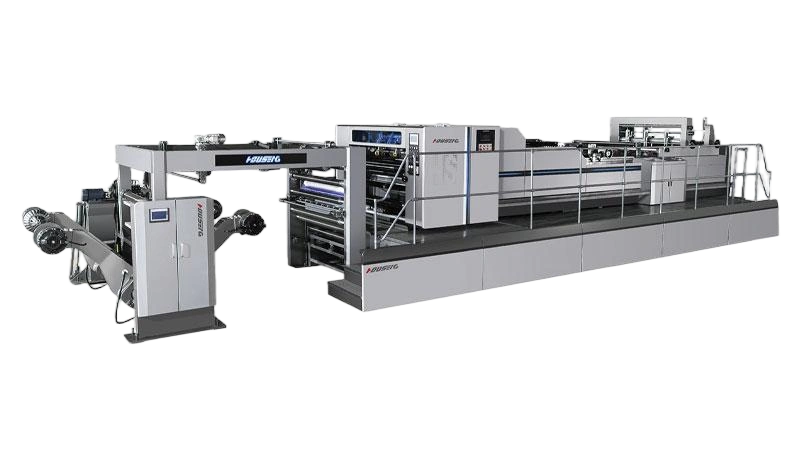
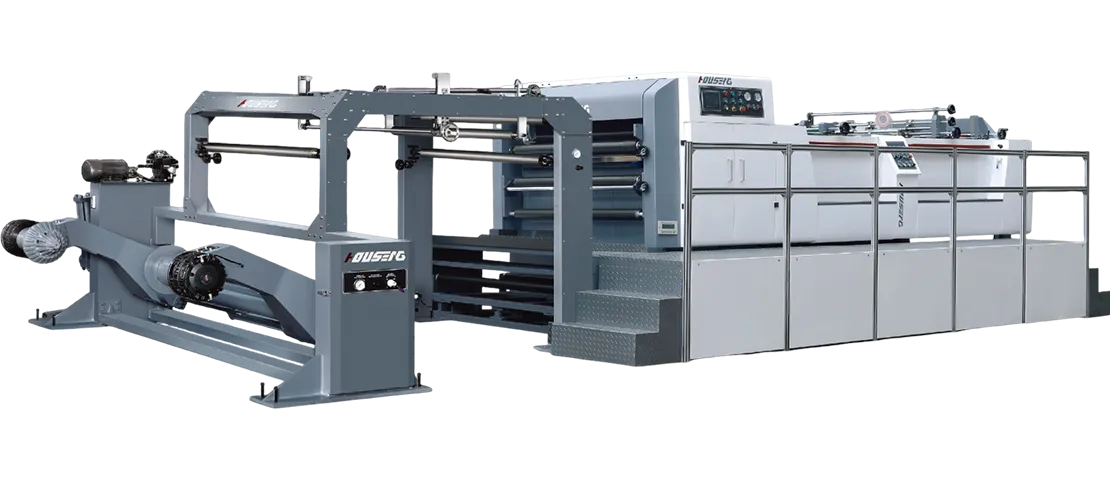
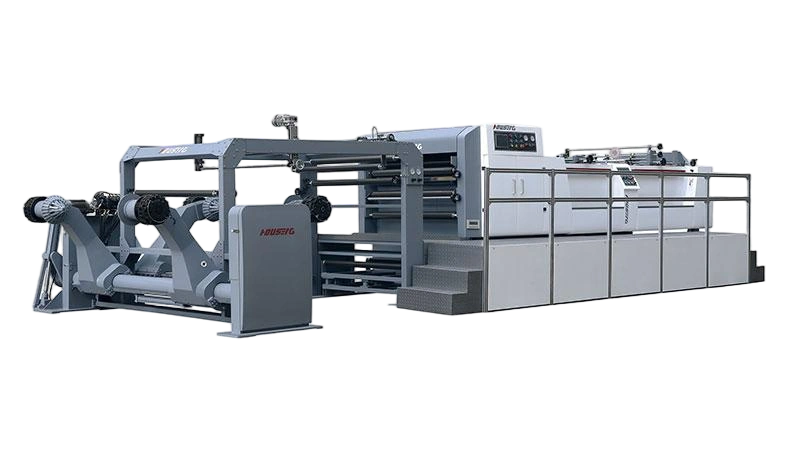
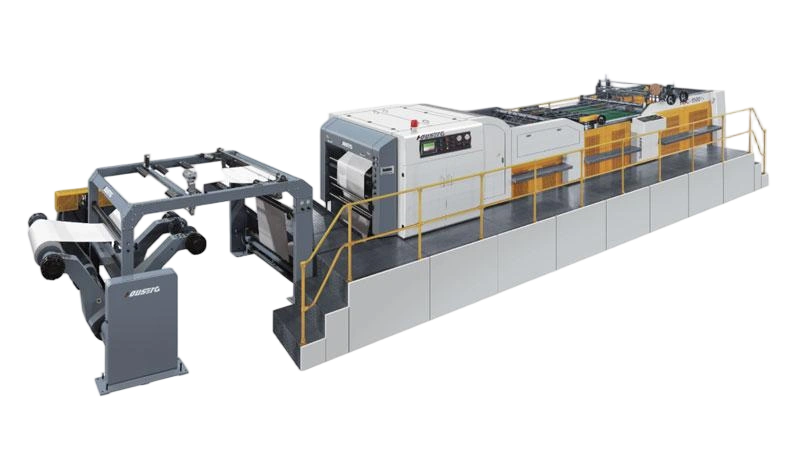
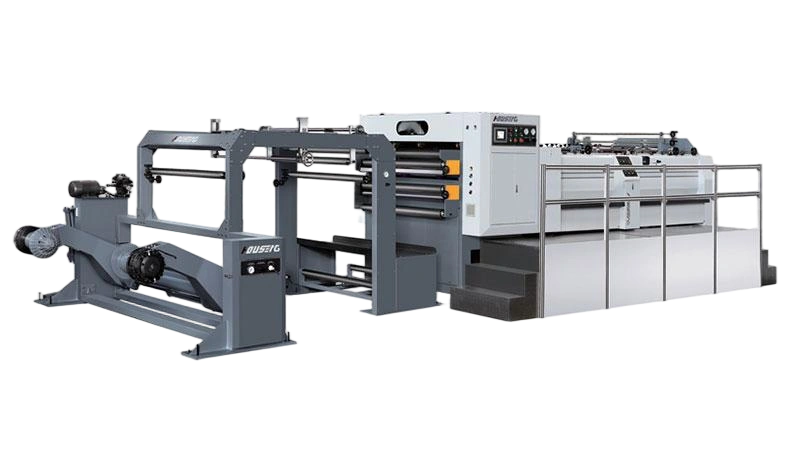
A roll‑to‑sheet cutting line represents a significant capital investment for a paper mill, a commercial printer, or a packaging converter. The machine is expected to run for a decade or more, cutting millions of sheets with consistent accuracy. When the specification sheet is reduced to a single number—the purchase price—the buyer risks selecting a machine that delivers the correct sheet length on day one but drifts out of tolerance within months, produces dusty edges that cause press downtime, or cannot handle the full range of paper grades that the business runs.
A structured evaluation of the seven factors below, with an emphasis on the technical specifications that directly affect cut quality and machine longevity, reduces the risk of an expensive mistake. These factors apply whether the buyer is comparing machines from different manufacturers or choosing between models within a single supplier's range, such as the High Precision Sheet Cutter series from HaoSheng.
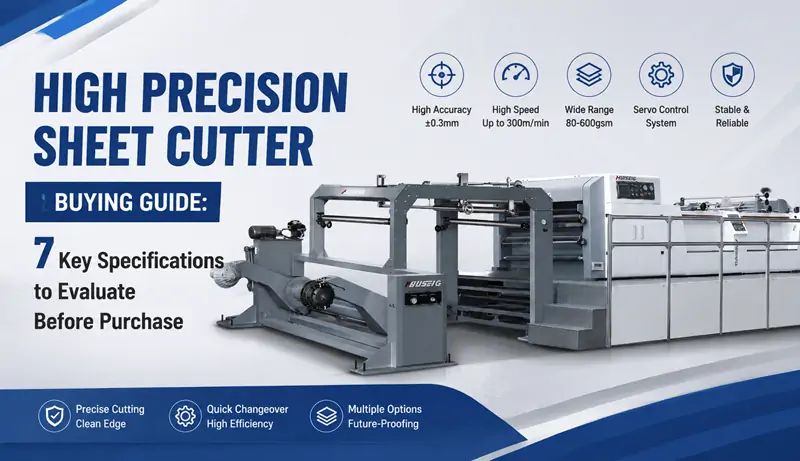
Knife Design and Cutting Accuracy
The knife is the heart of the sheeter. Two designs dominate the high‑precision segment: the double helical knife and the single spiral knife. A double helical knife, also called a twin‑knife or double rotary design, uses two intermeshing helical blades that cut from both sides of the web simultaneously. This produces a clean, square edge with minimal paper dust and allows cutting speeds of up to 300 m/min. The double‑knife design is preferred for high‑volume production of coated papers, cardboard, and other demanding grades.
A single spiral knife uses a single helical blade and is typically found on machines that prioritise a smaller footprint and lower capital cost. The maximum cutting speed is similar—300 m/min on servo‑driven models—but the maximum number of cuts per minute may be higher because the single‑knife drum can rotate faster. The HaoSheng HSC‑D series, for example, achieves up to 400 cuts/min with a single spiral knife, compared with 300 cuts/min for the double‑knife HSC‑B series.
Cutting accuracy is the specification that separates a precision sheeter from a basic one. The industry benchmark for servo‑driven precision machines is ±0.3 mm. This figure should be verified against the manufacturer's test report, not simply accepted from the brochure. The accuracy should be maintained across the full cutting length range—typically 400 mm to 1,650 mm—and across the full speed range. A machine that holds ±0.3 mm at 100 m/min but drifts to ±0.5 mm at 300 m/min is not a true high‑precision machine.
Servo Drive and Control System
The servo drive system controls the infeed of the paper web into the knife section. In a modern precision sheeter, the servo motor is directly coupled to the infeed roller and is controlled by a PLC that adjusts the feed speed in real time based on feedback from an encoder on the knife drum. This closed‑loop control is what maintains sheet‑length accuracy during acceleration, deceleration, and changes in paper tension.
The brand and specification of the servo drive matter. Machines equipped with Siemens PLCs and Emerson (or equivalent) servo drives offer a level of reliability and serviceability that is difficult to match with unbranded or entry‑level components. A globally recognised servo brand has a service network in most manufacturing regions, which reduces the time to repair if a drive fails. The control system should also support recipe storage, allowing the operator to recall the settings for a specific paper grade and sheet length at the touch of a button. For a full comparison of sheeting machines with documented servo drive specifications, the control system architecture is a key differentiator between models.
Paper Grade and Grammage Range
A sheeter that is purchased to cut 80 gsm culture paper today may need to cut 400 gsm coated board next year. The machine's specified grammage range—the minimum and maximum paper weight it can handle—must cover both current and anticipated production needs. A typical high‑precision sheeter handles 80 gsm to 600 gsm, with some models extending to 1,000 gsm.
The grammage range is not just a number; it reflects the stiffness of the knife frame, the power of the servo drive, and the design of the sheet transport system. Heavy board requires a more rigid frame to resist deflection under cutting force and a more powerful drive to maintain speed. The sheet delivery system must also be capable of stacking heavy sheets without edge damage. When comparing machines, the grammage range should be checked alongside the maximum cutting speed at the upper end of the range—a machine that can cut 600 gsm board but only at half its rated speed may not meet the throughput requirement.
Cutting Length Range and Changeover Speed
The range of sheet lengths a machine can produce determines its flexibility. The standard range for precision sheeters is 400 mm to 1,650 mm, which covers most commercial printing and packaging formats. Machines with a wider range are available but may require a larger footprint.
Equally important is the time required to change from one sheet length to another. A machine that requires manual adjustment of the sheet‑length setting using wrenches and trial cuts can take 10–15 minutes per changeover. A machine with servo‑controlled sheet‑length adjustment and recipe storage can complete the same changeover in under a minute. For a converter that produces multiple sheet sizes per shift, the cumulative time saving from quick changeover can add hours of productive capacity per week.
Slitting and Trimming Options
Most sheeters include slitting knives that cut the web into multiple narrower ribbons before the cross‑cutting station. The slitting system should be quick to adjust and capable of holding position during high‑speed operation. Pneumatic top‑shear slitting knives offer precise adjustment and are suitable for light paper, plastic film, and metal foil. Rigid knife holders are preferred for heavy board and high‑speed slitting.
The trimming system removes the rough edges of the paper web before it enters the knife section. A machine that produces clean, square trimmed edges without dust generation reduces waste and improves the quality of the finished sheet stack. The slitting and trimming configuration should be discussed with the manufacturer to ensure it matches the paper grades and widths the buyer intends to run.
Material Handling: Unwind, Tension Control, and Stacking
The unwind stand must accommodate the maximum roll diameter the converter uses—typically 1,800 mm for mill‑scale sheeters. The tension control system must maintain consistent web tension from full roll to core, preventing the paper from stretching or wrinkling as it enters the knife section. Pneumatic or magnetic particle brakes with closed‑loop tension feedback are standard on precision machines.
At the delivery end, the stacking system determines how neatly the sheets are presented. An air‑assist layboy, gentle stacker fingers, and a non‑stop stacking function that allows the operator to remove a completed stack without stopping the machine all contribute to higher productivity and less manual handling. For a closer look at HaoSheng sheeters with non‑stop stacking and quick sheet‑length adjustment, the delivery system design is a feature worth examining in detail.
Optional Functions and Future‑Proofing
A precision sheeter is a long‑term asset, and the ability to add functions as the business grows extends its useful life. Common optional functions include:
- Automatic splicer for non-stop roll changes
- Slitting and trimming knife automatic change system
- Platform weighing scale and stack height measurement
- Colour code sensor for pre-printed webs
- Dedusting rollers for dust-sensitive grades
- Inkjet coding system for sheet identification
- Automatic pallet handling and material flow systems
These options can be specified at the time of purchase or, in some cases, retrofitted later. The availability of a wide range of factory‑integrated options—nine functions are available on the HaoSheng platform—indicates that the machine has been designed with modularity in mind.
Making the Decision
The seven factors above—knife design, servo control, paper grade range, cutting length flexibility, slitting options, material handling, and future‑proofing—provide a structured framework for evaluating proposals. A machine that scores well on all seven is likely to deliver consistent accuracy, low waste, and reliable operation over a long service life.
For converters and paper mills looking to invest in a precision roll‑to‑sheet cutting solution, requesting detailed technical data sheets and, where possible, visiting a reference installation to see the machine in operation provides the final level of confidence. The time spent on evaluation before purchase is repaid many times over in years of trouble‑free production.