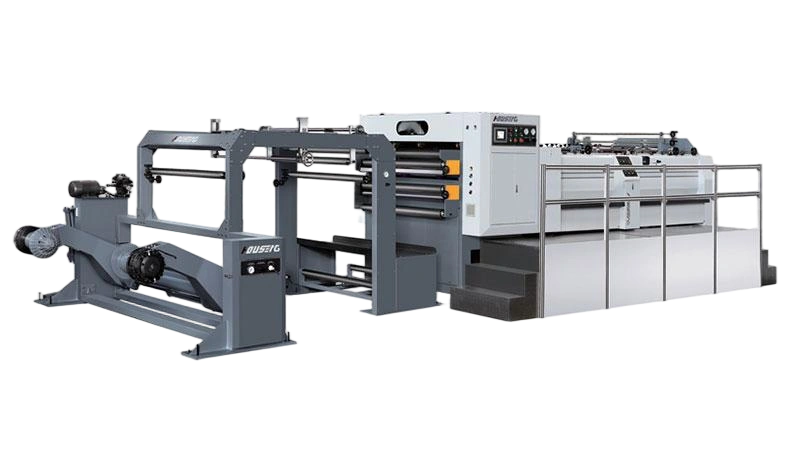
A packaging converter I visited last year had a simple rule: no one leaves on Friday until the sheeter maintenance checklist is signed off. Not because management was strict, but because the team had lived through a Saturday morning breakdown where a worn cam follower on the flying knife assembly cost them a full weekend of production and an angry call from a food brand client. That experience turned them into believers. The checklist they now follow isn’t complicated—it’s systematic. And it’s the reason their cutting section has seen a 40% reduction in unplanned stops over eighteen months.
If you’re running a high-speed sheet cutting line, the difference between a machine that lasts eight years and one that needs a major overhaul at five often comes down to the small, repeatable checks that don’t appear in the startup manual. Here’s a practical, three-tiered checklist you can adapt starting tomorrow.
Why Most Maintenance Plans Fail (And How to Fix Yours)
The typical maintenance log on a converting floor has two entries: “blade changed” and “lubrication done.” Everything in between—the gearbox oil condition, the timing belt tension, the encoder coupling play—gets addressed only when something snaps. The root issue isn’t negligence; it’s that checklists often lack measurable pass/fail criteria. “Check belt tension” is vague. “Verify timing belt deflection does not exceed 2 mm at 5 kg force” is actionable. The checklist below bridges that gap by giving you objective thresholds wherever possible, drawing on common practices in web-fed converting.
Tier 1: Daily Walk-Around (10 Minutes)
Start every shift with these five checks before the web threads:
-
Visual inspection of knife edges. Look for glints of reflected light along the cutting edge. A sharp, undamaged blade scatters light uniformly; a nicked edge produces bright spots. If you see one, mark it and plan a blade swap at the next roll change, not mid-run.
-
Anvil and knife drum surface cleanliness. Use a vacuum with a soft brush attachment—never compressed air. Adhesive residue from label stock or coating dust that builds up on the anvil surface acts as a thickness shim, causing micro-variations in cut force. A clean anvil is the cheapest way to maintain cut quality.
-
Scrap conveyor and trim removal path. A jammed trim blower or full scrap bin can back up into the cutting zone and damage the outfeed nip. It takes 30 seconds to verify.
-
Web guiding sensor lens. Wipe with a dry microfiber cloth. Even a thin film of paper dust can cause the edge guide to oscillate, leading to width variation in the final sheet.
-
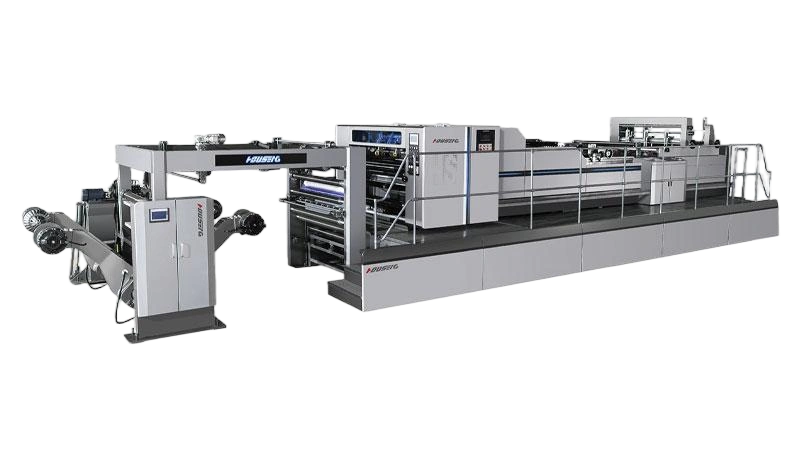
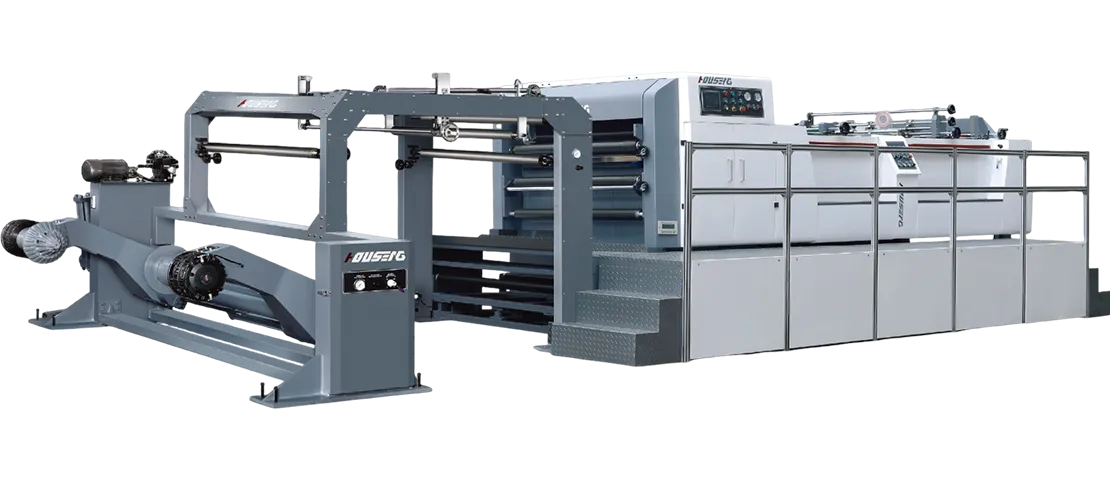
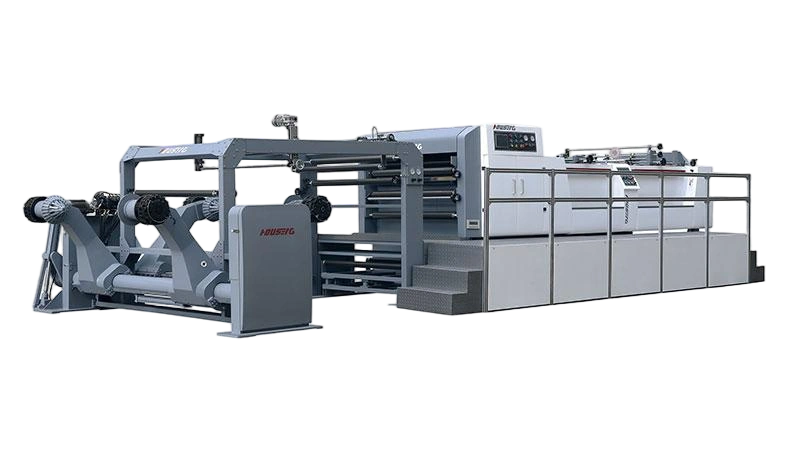
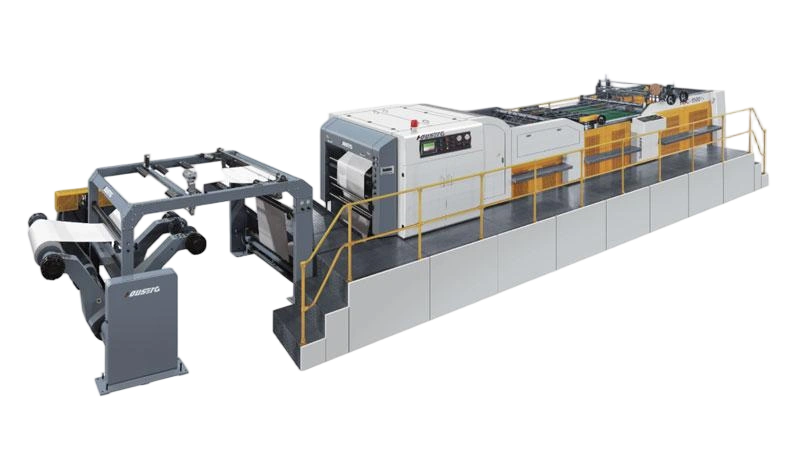
Listen to the knife engagement zone. On a machine running at production speed, stand close to the rotary cutting section. A rhythmic “swoosh” is normal. A clicking or hammering sound at each knife strike often indicates excessive clearance in the cam followers or a loose gib. If you hear it, log it immediately. Many operators who run a Synchro-Fly Sheeter Machine train their ears to catch these early noises before vibration sensors even register a change.
Tier 2: Weekly Deep Checks (30–45 Minutes)
These are best performed during a planned stoppage, such as a roll splice or a shift change overlap.
-
Measure knife stick-out and clamp torque. Using a dial indicator, verify that the blade projection from the holder is within 0.01 mm of specification across its full length. Then check the torque on all knife clamping bolts with a calibrated torque wrench. Thermal cycling from start-stop operations can relax bolt tension over time.
-
Inspect the cam and follower mechanism. On a flying knife design, the cam profile dictates how the knife enters and exits the web. Look for spalling, discolouration from heat, or uneven wear patterns. A scored cam surface means lubrication has failed at some point, and the damaged area will accelerate follower wear. If you spot this, configurations with hardened and precisely ground cam systems can significantly reduce the likelihood of recurrence.
-
Verify sheet length repeatability. Run 100 sheets at a fixed line speed, measure every tenth sheet, and record the standard deviation. A well-maintained system should hold ±0.3 mm or better on board stock up to 300 gsm. If your deviation is drifting upward, the issue is rarely the servo motor—it’s usually mechanical backlash or a slipping timing pulley.
-
Check the vacuum ports and air lines. Many flying knife systems use vacuum to hold the tail of the sheet during high-speed transfer. A partially clogged vacuum port creates erratic sheet handling, which operators often mistake for a dull blade. Use a vacuum gauge at the manifold and compare it to the machine’s original baseline.
Tier 3: Monthly and Quarterly Actions
Here, you move from checking to replacing and documenting trends.
-
Oil analysis for the knife drive gearbox. Pull a sample and send it to a lab. An upward trend in iron content indicates gear wear; copper points to cage wear in bearings. A single report tells you little; six quarterly reports paint a trend that lets you plan a gearbox rebuild during a holiday shutdown instead of a peak season.
-
Timing belt tension and tooth inspection. The synchro-fly design relies on precise registration between web speed and knife speed. A belt that’s lost tension or has missing teeth will introduce a cyclical error in sheet length. Use a sonic tension meter and log the reading. If tension has dropped more than 15% since the last measurement, find the cause before re-tensioning.
-
Replace encoder coupling inserts. These small elastomeric elements in the feedback loop degrade from ozone and heat exposure. A cracked coupling introduces torsional wind-up that the drive can’t fully compensate for, leading to registration drift that worsens as the machine warms up. At $50–$100 per coupling, proactive annual replacement is far cheaper than the scrap generated by undetected drift.
-
Verify safety interlocks and emergency stop function. Maintenance tasks often focus on performance, but a sheeter that doesn’t stop within the required stopping distance is a liability. Test all gate switches and light curtains per the manufacturer’s interval.
Common Mistakes That Undercut Your Efforts
-
Changing the blade without stoning the holder pocket. A tiny burr in the pocket will tilt the new blade by a few microns, creating a stress riser that can fracture the carbide edge within the first 100,000 cuts.
-
Adjusting the knife timing to compensate for a dull blade. Operators sometimes retard the knife register to “push through” a dull edge. This alters the sheet length on every cut and masks the real problem. If you find yourself making HMI offset changes more than once a month, the root cause is mechanical.
-
Skipping the gearbox breather. A clogged breather on the knife drive gearbox causes internal pressure to build, which pushes oil past seals. If you notice oil mist around the output shaft seal, check the breather first—it’s a two-minute fix.
Building a Predictive Culture
The checklists above are the foundation. Once you have three months of logged data—sheet length deviation, blade life in linear meters, gearbox oil iron content—you can begin predicting failures rather than reacting to them. Some packaging plants now tie this data directly into their CMMS, setting automatic work orders when, for example, sheet length standard deviation crosses a threshold of 0.5 mm. This approach works best when the machine itself provides accessible diagnostic ports and sensor data without requiring an engineering degree to interpret. Haosheng’s high-precision synchro-fly cutting platform is built with this philosophy, providing transparent feedback that makes condition-based maintenance a realistic goal for mid-sized converters, not just the giants.
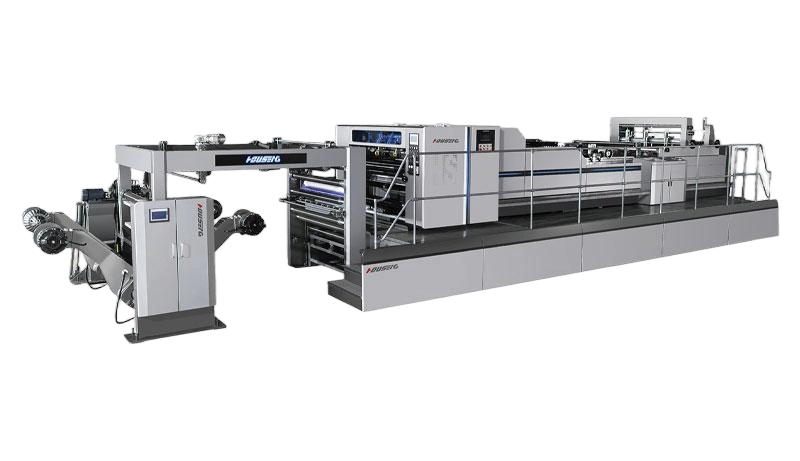
A Synchro-Fly Sheeter Machine operates with tight synchronisation that rewards disciplined maintainers and punishes shortcut-takers. The checklist shared here won’t eliminate every possible failure mode—no document can—but it will catch 80% of issues that stem from neglect of basic mechanical hygiene. Print it, laminate it, and clip it to the side of the control panel. When the next unplanned stoppage doesn’t happen, you’ll know why.
Disclaimer: The maintenance intervals and checks described are general guidelines derived from industry practice. Always follow the specific instructions provided by your equipment manufacturer and adhere to your local safety regulations.