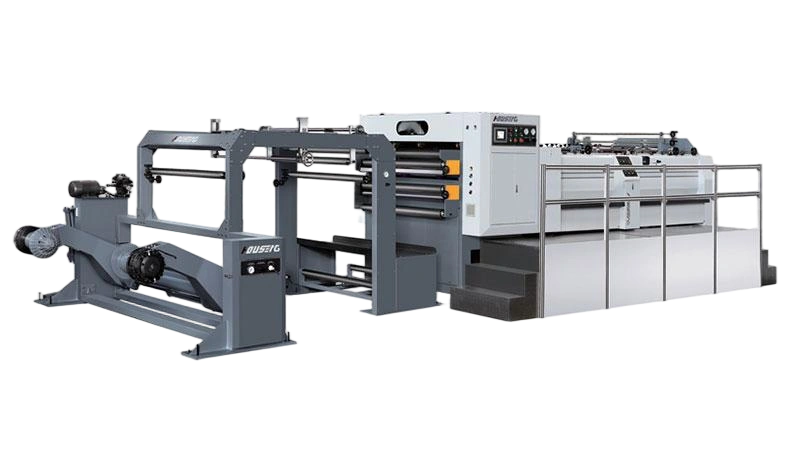
In the paper converting industry, the step that transforms a jumbo roll into stacked sheets is deceptively complex. The quality of the final product — whether it feeds smoothly through a digital press, registers accurately in multi-colour offset, or stacks uniformly in packaging lines — is largely determined in those seconds when the web meets the knife. A converter running 5,000 sheets per hour can lose hundreds in waste within minutes if sheet dimensions drift by as little as 0.5 mm from their specified targets.
What Defines a Quality Sheet: Three-Dimensional Parameters
Three-dimensional parameters define output quality at this stage: length accuracy, squareness, and edge straightness. International standard ISO 1008 specifies the nominal sizes and aim dimensions of papers in sheets, with their cutting tolerances, and includes a method for checking the squareness of the sheets and straightness of their edges.
In practice, industry-observed tolerances provide a concrete picture of what different equipment levels can achieve. Entry-level sheeters typically achieve cutting accuracy of ±0.5 mm across standard applications. Mid-range servo-driven equipment can deliver cut-length tolerances of ±0.25 mm, with squareness deviation between adjacent sides held to ±0.5 mm. At the high end, certain precision sheeters with advanced servo control systems achieve cutting accuracy of up to ±0.1 mm.
The standard trade tolerances for paperboard — typically ±1.5 mm for sheet length and width under 500 mm, and ±1.0 mm corner-to-corner for squareness — are adequate for many general-purpose applications. But tolerance stacking in multi-out forms, tight nesting layouts, and high-speed press operations can turn even these “acceptable” ranges into a source of registration drift, die misalignment, and folding errors. A small squareness deviation that is invisible to the naked eye can cause misregistration in offset printing, where each colour must align precisely; trigger jams in high-speed digital feed paths; or disrupt automated die-cutting andglueingg lines in packaging converting.
These downstream effects explain why converters serving premium segments — graphic arts, luxury packaging, pharmaceutical cartons — increasingly seek equipment capable of holding tolerances tighter than general trade standards.
How Equipment Design Affects Output Quality
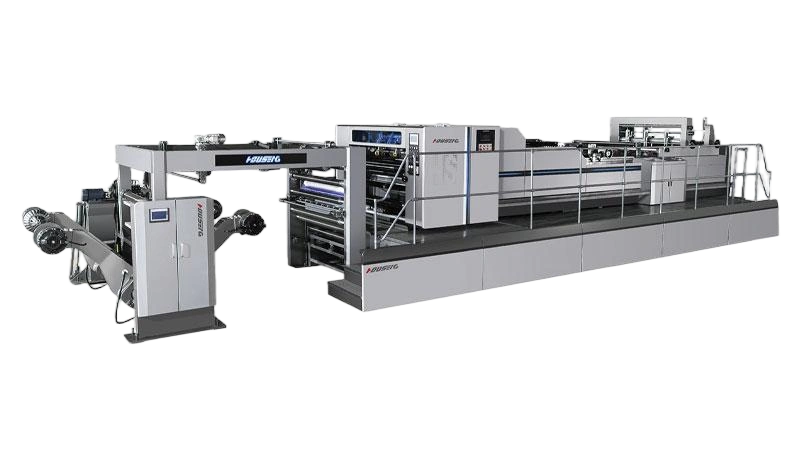
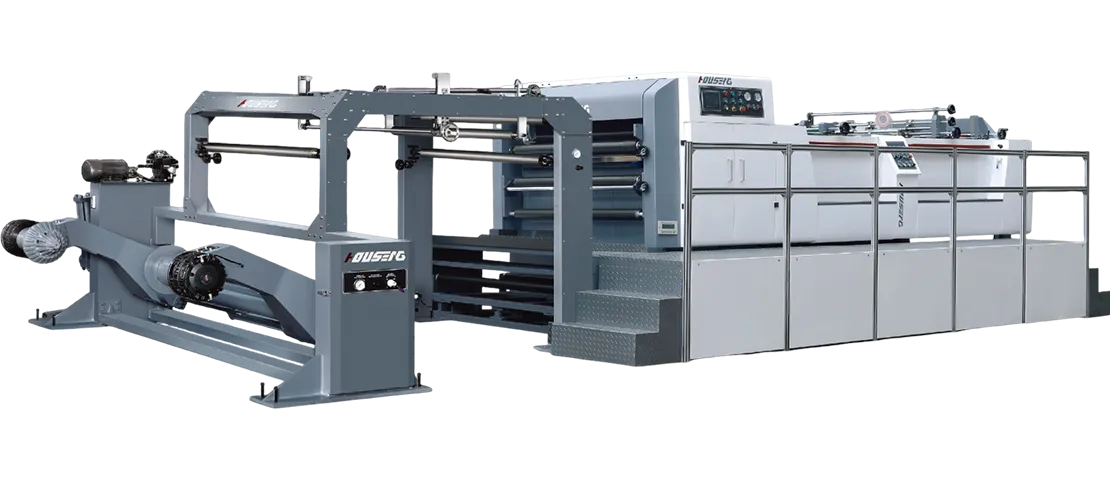
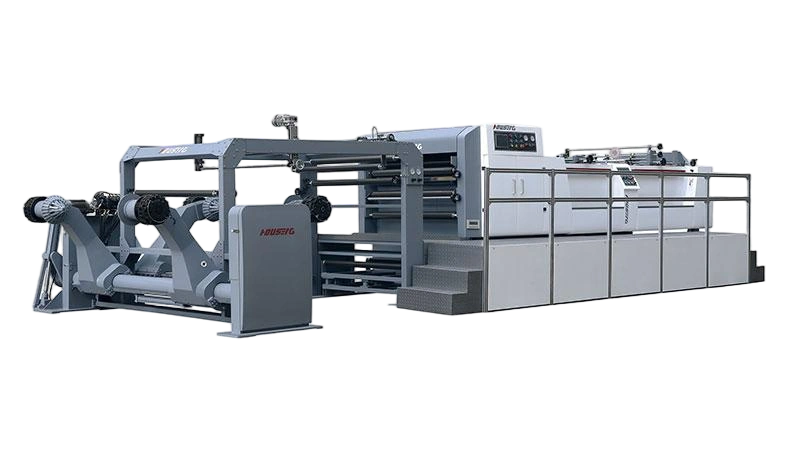
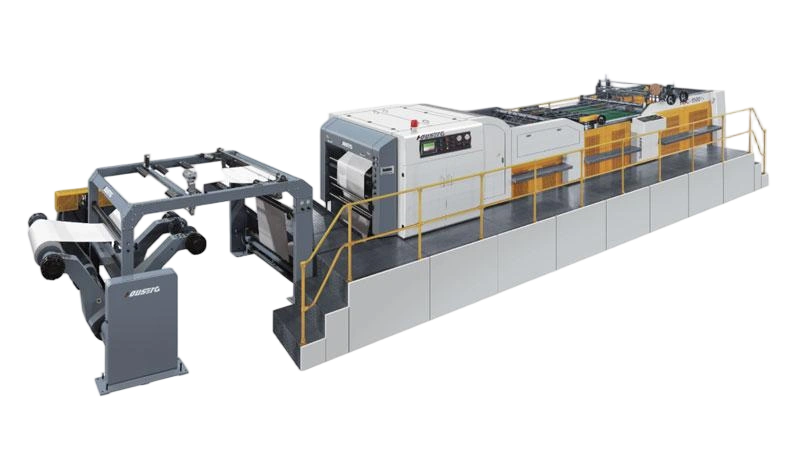
Modern sheet-cutting lines integrate several subsystems whose combined performance determines final sheet quality: servo-driven knife positioning, automatic tension regulation, and decurler units to handle the curl inherent in roll-fed material.
Tension control is particularly critical. Linear dancer systems use digital controllers that respond quickly and precisely to roll diameter and line speed changes, providing uniform web tension — a prerequisite for consistent cut-length accuracy. Some configurations employ multi-point tension control with infrared distance-measuring sensors that feed back to PLC systems, automatically adjusting brake load through proportional valves. Independent decurler units can automatically adjust the degree of decurling based on paper roll condition, which directly contributes to flatness in the finished sheet.
Quality assurance increasingly relies on both inline monitoring and offline verification. ISO 18522 specifies the procedures for determining the cross-direction profiles of physical properties of paper and board using automated off-line testers — covering properties such as grammage and thickness across the full sheet width. Paired with automated off-line testing, converters and mills can validate that every sheet in a stack meets specification, not just those pulled for occasional spot checks.
Blade quality, geometry, and alignment also matter. TKM, a manufacturer of sheeter knives, specifies straightness of the cutting edge at 0.1 mm per 1,000 mm for its precision-grade products. On substrates such as coated paperboard or barrier-treated cartons, a dull or poorly aligned blade produces burrs, dust, and edge defects that degrade print performance and can cause feeding problems in downstream equipment.
When Material Choice and Automation Intersect
A common misconception is that automation in sheeting primarily increases throughput. In practice, its greater contribution is to consistency. When knife positioning, format changes, and overlap control are handled by servo-driven systems rather than manual adjustment, the output becomes repeatable across shifts, operators, and production batches.
The choice of substrate further complicates the quality equation. Each material — coated paper, kraft paper, art paper, duplex board, and packaging grades up to 1,000 gsm — behaves differently under the knife. A cutting system that works well on uniform mid-weight offset stock may produce inconsistent results on high-gloss coated sheets or heavy carton board. Double rotary knife designs, which operate like scissors on the material, are noted for delivering smooth and accurate cuts with edges that are neat and free of dust or burrs, making the terminal sheet suitable for demanding print applications.
For converters evaluating precision-sensitive sheeting applications, exploring high-precision roll-to-sheet converting solutions can provide a practical starting point for understanding what current technology can deliver in terms of dimensional control.
Integrating Quality Management Into Sheeting Operations
Modern converting equipment increasingly incorporates digital integration that supports long-term quality management. Open control architectures connect with ERP and MES systems, enabling real-time order tracking, preventive maintenance alerts, and predictive diagnostics. This digital backbone ensures that quality parameters are not just set once at commissioning but actively monitored and maintained throughout the machine‘s operational life.
Leading sheeter manufacturers document that their equipment is used and verified by major cosmetics and pharmaceutical packaging customers, where output consistency and risk reduction are primary purchasing criteria. The underlying principle is straightforward: when the equipment can demonstrate repeatable performance across diverse substrates and production volumes, converters spend less time on rework and more time on productive output.
For mills and converting operations considering an upgrade to their sheeting capability, evaluating advanced sheet cutting and stacking systems designed for precision-sensitive applications offers a path to reducing waste and customer rejects simultaneously.
The Bottom Line
Output quality in paper processing is not a post-cut inspection function — it is a machine capability that must be specified and verified before purchase. The dimensional parameters that matter most — cut-length accuracy, squareness, and edge quality — are directly determined by the rigidity of the cutting frame, the precision of the knife and tension control systems, and the repeatability of the automation architecture. Converters who treat these specifications as primary selection criteria, rather than evaluating equipment on speed and web width alone, are the ones who consistently deliver press-ready sheets to their customers. For those seeking to understand what current precision sheeting technology can achieve in terms of measurable output quality, looking into heavy-duty precision cutting systems for paper and board is a logical next step.