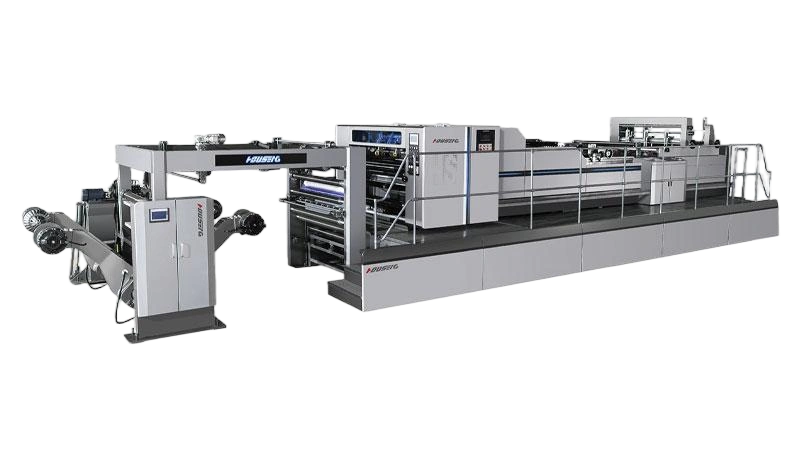
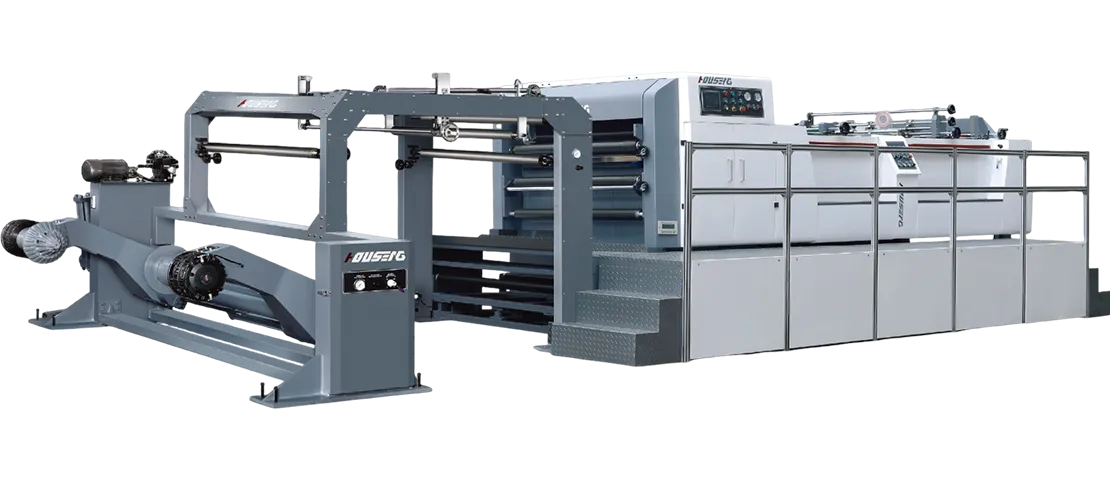
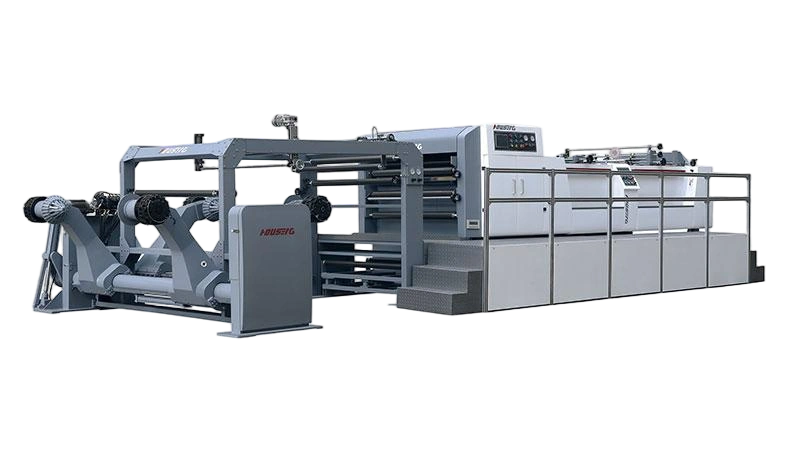
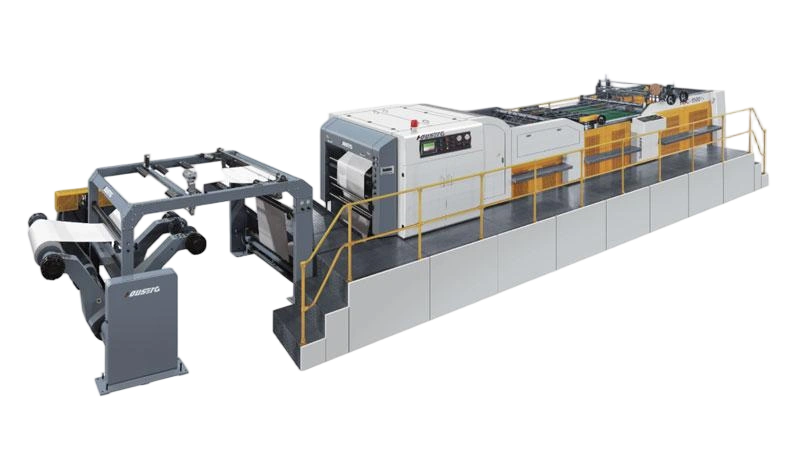
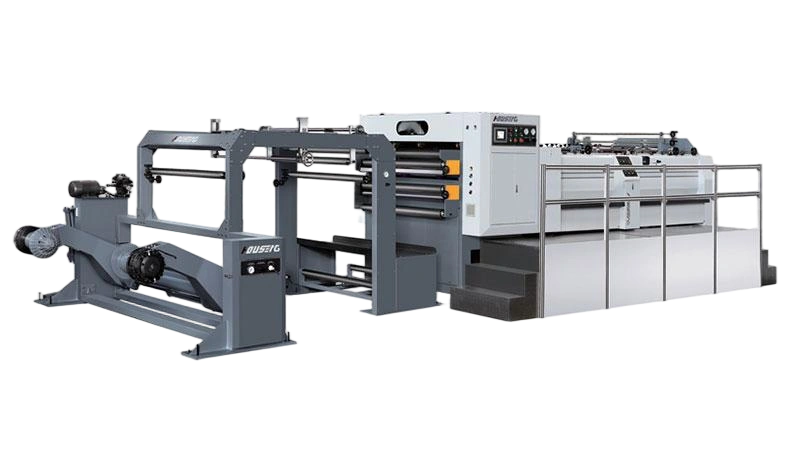
In the realm of modern printing and packaging production, automatic paper sheet cutters stand as indispensable core equipment, and their paper type compatibility directly determines production efficiency, product quality, and cost control. Choosing the right paper type for these machines not only avoids equipment malfunctions but also ensures the consistency of finished products. Below is a detailed analysis of compatible paper types, cutting challenges, adaptation solutions, incompatible scenarios, and practical compatibility testing methods for automatic paper sheet cutters.
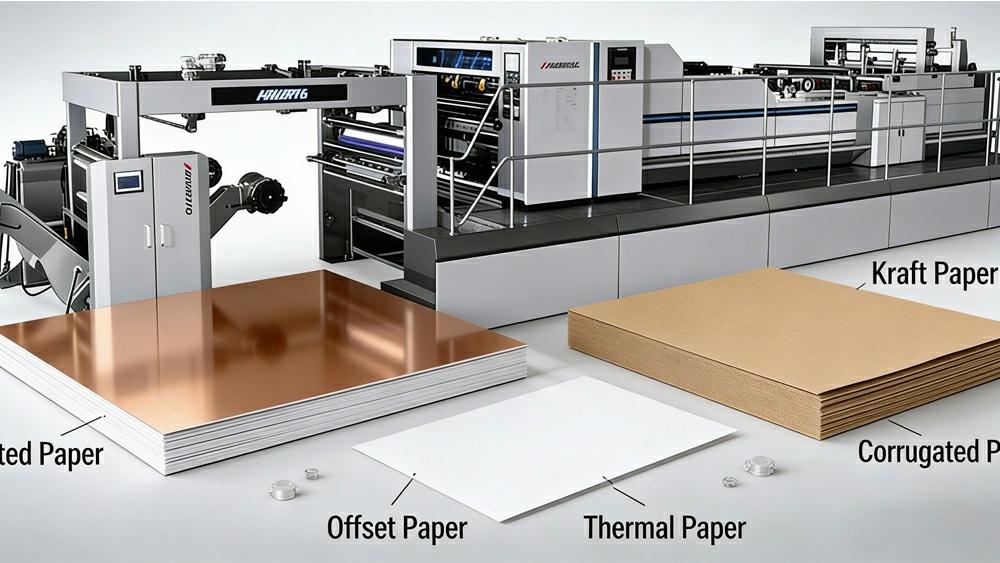
Compatible Paper Types for Automatic Paper Sheet Cutters: Classification and Adaptation Details
Automatic paper sheet cutters are designed to handle a wide range of paper materials, but their adaptation effects vary based on paper properties such as thickness, fiber structure, and surface smoothness. We classify compatible paper types into three categories and elaborate on their cutting characteristics and machine adaptation schemes.
1. Printing-Grade Papers: Focus on Precision and Surface Protection
Printing-grade papers are the most commonly used materials in the printing industry, and their compatibility with automatic cutters is closely related to printing quality. The key requirement for cutting this type of paper is to maintain edge flatness without damaging the printed surface.
Coated paper, known for its smooth surface and high gloss, is widely used in brochures, posters, and high-end packaging. The main cutting challenge lies in its surface coating – excessive cutting pressure may cause coating peeling or edge burrs. For adaptation, automatic cutters should be equipped with sharp, high-hardness blades and adjust the cutting speed to a medium range (usually 3-5 sheets per cut for 128g/m² coated paper). Additionally, installing a surface protection pad on the cutting table can prevent scratches on the paper surface.
Offset paper, with its moderate fiber density and good water absorption, is the staple for books, newspapers, and office documents. Its cutting difficulty is relatively low, but uneven fiber distribution may lead to inconsistent edge smoothness. The adaptation scheme involves optimizing the feeder's paper separation mechanism to ensure stable feeding, and using standard blades with regular sharpening to maintain cutting precision.
Newsprint, characterized by loose fiber structure and low strength, is prone to tearing during cutting. The main challenge is controlling the feeding and cutting force – excessive force can cause paper deformation or edge fraying. For this, automatic cutters should adopt a soft feeding mode, reduce the cutting pressure appropriately, and use blades with a special angle (usually 15-20 degrees) to minimize fiber damage. Meanwhile, keeping the cutting environment dry (humidity 45-55%) can prevent newsprint from absorbing moisture and becoming soft, which affects cutting effect.
2. Packaging-Grade Papers: Emphasis on Strength and Feeding Stability
Packaging-grade papers are mostly thick and have high strength, requiring automatic cutters to have strong feeding capacity and cutting force. The core of adaptation is to ensure stable feeding without slipping and complete cutting without residue.
Kraft paper, with its high tensile strength and wear resistance, is widely used in cartons, bags, and packaging liners. The cutting challenge is its high fiber toughness, which may cause blade blunting or incomplete cutting. The adaptation scheme includes equipping the machine with high-toughness alloy blades, increasing the cutting pressure (adjusting the hydraulic system pressure to 8-10 MPa for 200g/m² kraft paper), and optimizing the feeder's pressure roller to enhance feeding friction and avoid slipping during the cutting process.
Corrugated paper, composed of a corrugated core and surface paper, has the characteristics of light weight and high strength but uneven thickness due to the corrugated structure. The main cutting challenges are uneven feeding and easy crushing of the corrugated core. To address this, automatic cutters need to use a segmented feeding mechanism to ensure that the corrugated paper is flat during feeding; at the same time, increase the feeding pressure appropriately (adjusting the pressure roller pressure to 0.3-0.5 MPa) and use a double-blade cutting system to achieve clean cutting without crushing the corrugated structure. Additionally, adjusting the cutting speed to a low range (1-2 sheets per cut) can improve cutting stability.
Cardstock, with moderate thickness (usually 250-400g/m²) and high stiffness, is commonly used in greeting cards, gift boxes, and tags. The cutting difficulty is that it is prone to edge curling or cracking due to uneven stress during cutting. The adaptation scheme involves pre-adjusting the blade gap (controlling it within 0.1-0.2mm) to ensure uniform cutting force, using a heated blade (temperature 40-60℃) to reduce edge curling for some special cardstocks, and installing an edge pressing device to fix the paper during cutting and avoid displacement.
3. Special-Grade Papers: Targeted Adaptation for Unique Properties
Special-grade papers have unique physical or chemical properties, requiring targeted adjustments to automatic cutters to ensure compatibility. Improper operation may not only affect cutting quality but also damage the machine or the paper itself.
Release paper, coated with a silicone layer on the surface, has low surface friction and is widely used in adhesive products and label printing. The main cutting challenge is surface slippage, which leads to inaccurate feeding and cutting position deviation. The adaptation scheme includes replacing the feeder's rubber roller with a high-friction rubber material (Shore hardness 60-70), installing a positioning sensor to monitor the paper feeding position in real time, and using a low-friction blade to avoid damaging the silicone coating on the surface of the release paper.
Thermal paper, which changes color when heated, is commonly used in receipts, labels, and medical records. The key cutting challenge is that high-temperature blades or excessive friction during cutting may cause accidental color change on the paper surface. The adaptation scheme is to use low-temperature blades (maintaining the blade temperature below 30℃) and reduce the friction between the paper and the machine parts by applying a thin layer of silicone oil on the feeding roller (ensuring no oil stains on the paper surface). Meanwhile, increasing the cutting speed appropriately can reduce the contact time between the blade and the paper and avoid thermal damage.
Non-woven fabric, though not a traditional paper, is often processed using automatic paper sheet cutters in the packaging and textile industries. It has loose fiber structure and poor dimensional stability, making it prone to stretching and deformation during cutting. The adaptation scheme involves using a vacuum adsorption feeding system to fix the non-woven fabric and avoid stretching; using a serrated blade to enhance cutting efficiency and reduce fiber pulling; and adjusting the cutting pressure to a low range (3-5 MPa) to prevent excessive compression deformation of the non-woven fabric.
Incompatible Paper Types: Scenarios Requiring Customized Machines
While automatic paper sheet cutters have strong compatibility, some paper types cannot be processed by standard models due to their special properties, and require customized equipment or auxiliary tools. Understanding these incompatible scenarios can help enterprises avoid unnecessary equipment investment and production losses.
Extra-thick cardboard (thickness exceeding 5mm) is incompatible with standard automatic cutters because the cutting force of standard models is insufficient to achieve complete cutting, and the feeder cannot stably feed thick cardboard, which may cause equipment jamming or blade damage. Processing such cardboard requires customized high-pressure automatic cutters (cutting pressure above 15 MPa) and a reinforced feeding mechanism to ensure stable feeding and complete cutting.
Fragile rice paper has extremely thin texture and loose fiber structure, and is prone to tearing or breaking even with slight force during cutting. Standard automatic cutters cannot control the feeding and cutting force with high precision, leading to low product qualification rate. Processing rice paper requires customized ultra-precision automatic cutters with a soft feeding system (using air pressure to separate and feed paper) and a micro-pressure cutting mechanism (cutting pressure below 2 MPa), and auxiliary tools such as paper edge protectors to reduce fiber damage.
In addition, paper types with special surface treatments (such as gold-plated, silver-plated, or embossed paper) are not completely incompatible with standard automatic cutters, but their surface is easily scratched or damaged during cutting. Although they can be processed by adjusting the machine parameters (such as using a surface protection pad and reducing feeding pressure), the product qualification rate is lower than that of customized models with surface protection mechanisms.
Choose the Right Paper Type and Machine: Lay the Foundation for Efficient Production
The paper type compatibility of automatic paper sheet cutters is a key factor affecting production efficiency and product quality. By understanding the compatible paper types, their cutting challenges and adaptation schemes, as well as incompatible scenarios and testing methods, enterprises can choose the right paper type and machine according to their production needs, and avoid unnecessary losses caused by improper selection.
If you are unsure about the compatibility between your commonly used paper type and automatic paper sheet cutters, or need advice on machine parameter adjustment or customized equipment, you can consult HAOSHENG to get targeted solutions. Don't let paper compatibility issues become a bottleneck in your production – take action to optimize your production line today!